Marmalades & Jam
Chocolate Sauces
Flavored Syrups
Fruit Cakes
Salt-Preserved Citrus
Preserved Fruits & Relish
About Robert
Press
View Cart
 

Marmalades & Jam

"Great Britain, take note: Californian Robert Lambert has raised the bar on marmalade, and instead of exporting your products to the U.S., you will want to import his."
­Karen Hochman, The Nibble

Read a review at “The Nibble” TheNibble.com


The treasured preserving memories of my childhood and the wealth of California citrus have long tempted me to make marmalade. Access to the Gene Lester collection, one of the finest private citrus collections in America, at last made it irresistible. I studied its lore and history, read every recipe the internet, my books, friends and colleagues could provide, then tested a few of the best before bravely striking out on my own.

The basic method is that citrus fruit is cut and water added to soak for a time. This is boiled down before the sugar is added, then boiled down again until it reaches the setting point. If I blended rare fruit with more common, and if I replaced part of the water with compatible juices, I found I could spike the flavor of my marmalades beyond any others I’d had.

The results have garnered ecstatic responses from die-hard fans and new converts alike who are stunned by the explosion of complex flavors. Marmalade should be a balance of sour, bitter and sweet, but these have so much more! They showcase the exotic and rare--in some cases only a few trees exist--fruits propagated by growers who are passionate about these wonders of nature.

All my marmalades are hand crafted in small batches, as any good marmalade must be. The pectin that sets the marmalade resides not only in the fruit's pith but in its seeds, and many of the exotics I use are full of them. Every seed must be located and picked out by hand as the fruit is hand-cut into a fine julienne before they are tied in a bag and added back to the fruit to cook. Many hours of skilled labor account for these products cost and value.

Use these fine marmalades as usual, on toast and scones and English muffins, but also with cheese or in a meat glaze or marinade. Once you try them you'll find many ways to enjoy them, as I have!

NEW!
New for 2010 Jam and Jelly
With my marmalade line established I began to think about creating some jams, which is a preserve made from any fruit but citrus. At first I hoped to make one from Gene Lester’s rare cherry-plum hybrid, but as it turned out the crop was very poor last spring. Through Farmer’s Market friends I found some superb fruit that has led me down other paths. I am proud to present these 2 new products:

 
Raspberry Champagne Jelly
$12.00
Through a friend I found a grower with incredible raspberries. As the baskets are filled for market he must pick out overripe berries as they’ll go bad before they’re sold. These he saves and sells to me, only the darkest, most flavorful fruit. I spend many hours pressing them through fine mesh sieves by hand, the only way to remove all the pulp and leave nothing behind but seeds. The result is more a velvety seedless jam than a jelly.

I combine the juice and pulp with less than an equal amount of sugar and infuse this with my favorite champagne-scented geranium, rose geranium and a bit of fresh lime juice. Cooking this takes me back to my most treasured food memory, picking wild raspberries at the farm with my grandmother and helping to make the jam we would eat all winter. Vibrant, bright, perfumed, this is one of the finest products I have ever produced.

Ingredients: raspberries, cane sugar, lime juice
8 oz.


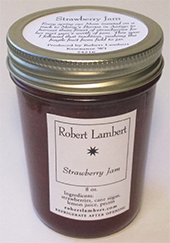
Strawberry Rhubarb Jam Available June 1, 2010
$12.00
As a child back in Wisconsin rhubarb sauce was the first thing I ever made by myself, the thick red stems brought back on my bike from my Uncle Charlie’s a block away. Rhubarb is a challenge to grow in coastal California, but a Farmer’s Market vendor I know has begun bringing it from the Sierra foothills where it’s cold enough to thrive. I blend this with superb organic strawberries from Ledesma Family Farms, tiny delicate berries you can smell from across the aisle at my Saturday market in Oakland. Cooked with less sugar than fruit and a lemon-scented geranium for a bright citrus note.

Ingredients: strawberries, rhubarb, cane sugar
8 oz.


NEW! Yuzu Marmalade, very limited supply
$20.00
Yuzu is a popular citrus in Japan, technically categorized as a lime but there the similarity ends. This earthy, richly perfumed fruit is in a class of its own. Full of seeds and with little juice, its strength is in its heady peel. Since plant quarantines prevent importing there is at present little supply and an enormous demand here, pushing prices as high as $20 a pound. I was able, by guaranteeing to purchase a grower’s entire crop and picking them myself–very sharp thorns!--to get a better price. Most I made into syrup, but decided to do a bit of marmalade as well. With 8 pounds of seeds in 45 pounds of fruit, and 2 cutters working most of a day for 4 batches, I will not do this again, but it is superb! Blended with a bit of Texas lemon, white grapefruit and Meyer lemon juice. Get it while it lasts!

Ingredients: yuzu, cane sugar, Texas lemon, water, Meyer lemon & grapefruit juice
8 oz.


Seville Orange Marmalade
$15.00
My version of this classic sour orange marmalade blends in a small amount of bergamot orange for its perfume, and Meyer lemon, which has some orange parentage, for complexity. An English friend has dreams of this.

Ingredients: cane sugar, Seville oranges, Bergamot oranges, water, orange juice, Meyer lemon juice
8 oz.


Blood Orange Marmalade
$15.00
The berry-like tang of deeply colored blood oranges from the DeSantis family is here blended with their Seville oranges and some fine pear vinegar to balance the sweetness of this fruit. For those who lean towards a sweeter marmalade, as well as those who love blood oranges.

Ingredients: Blood oranges, cane sugar, Seville oranges, water, vinegar
8 oz.


Five Mandarin Marmalade
$15.00
Although I am indebted to his generosity for many of my accent exotics, the strength of the Gene Lester citrus collection is in its diversity of mandarin oranges, and I take full advantage of them here. This marmalade blends cut Daisy, Sampson, Oroval, Rangpur, and the exquisite Calamondin, with a host of Satsumas, Clementines and other mandarins in the juice mix. Since the more different flavinoids a marmalade contains, the better, this one is bursting with complex flavor!

Ingredients: mandarin oranges, cane sugar, water, Meyer lemon juice.


Five Grapefruit Marmalade
$15.00
I pick white cocktail grapefruit, my favorite, from an old tree near downtown Napa, California and blend them with several Gene Lester rarities. The Mandalo and Poorman oranges are both delicious orange-grapefruit hybrids, and the 2 others, Shekwasha and Sacaton citrumelo, are grapefruit-like exotics with notes of passionfruit, mango, pineapple and pine. An even greater proportion of juice here and a blending of the exotic and familiar make this stellar marmalade a rocket-ride of superb flavor, with a long finish, gorgeous color and a perfect set. Wonderful with cheese.

Ingredients: Cane sugar, white grapefruit, water, Poorman orange, Mandalo, Shekwasha, Sacaton citrumelo
8 oz.


Five Lime Marmalade
$15.00
One of my sharper marmalades and one of my most loved, a lime love-fest of Bearss lime, kaffir lime, Rangpur lime, Tavares limequat, and Palestinian sweet lime, an unusual citrus that contains no acid. Sharp and zesty, great with cheese or as a meat glaze, try it in a marinade with mustard and soy sauce for pork tenderloin. My mother loves it!

Ingredients: Cane sugar, Key limes, Rangpur limes, limequats, kaffir limes, Palestinian sweet limes, water
8 oz.


Membrillo/Quince Paste one pound
$38.00
Quince is a pectin-rich fruit that figures in history as the original golden apples of mythology. It looks like an apple but exudes a heady perfume and is so firm it often needs cooking to be edible. In membrillo the fruit is mixed with sugar and cooked down to a thick paste that can be sliced.

I first encountered this food in my marmalade research. It has been made in Spain since the Middle Ages and is traditionally eaten with manchego, a dry sheep’s milk cheese from La Mancha. When the Moors brought the sour orange to Spain from North Africa it was discovered that this fruit was also high in pectin, and a similar paste was made from it that evolved into the citrus marmalades we know today.

Quince came into my life quite by accident. I became friends with the owners of an auto repair shop that serviced my truck, Farmer’s Market customers on the weekends they weren’t at their country place in Humboldt County. It turned out that on their 20 acres west of Garberville they had planted a certified organic quince and apple orchard, and were about to bring in their first crop.

It was Christmas Eve when I got a call from Mike that they were on their way. A few hours later he showed up with 500 pounds of end-of season quince. I spent the next 2 weeks in a frantic race against time to process it all, but the ripe fruit was superb, with waxy deeply colored yellow skin and a heavenly scent.

Making membrillo is an arduous task. It takes me up to 17 hours to produce one 20-pound batch, from preparing the fruit to constantly stirring the volcanic mass as I boil it, bound up in mask, gloves and gauntlets, to hours more of baking. Reduce, reduce. But my result, after a few trials, was far superior even to Iberian imports, and has found great success in the fine cheese shops that now carry it.

Enjoy my membrillo traditionally atop manchego cheese, or any firm salty cheese. Add a bit to meat sauces to thicken and add a fruity note.

Ingredients: quince, sugar, yuzu lemon, Texas lemon

Available in 1-pound and quarter-pound quantities.


Membrillo/Quince Paste quarter-pound
$10.00
Quince is a pectin-rich fruit that figures in history as the original golden apples of mythology. It looks like an apple but exudes a heady perfume and is so firm it often needs cooking to be edible. In membrillo the fruit is mixed with sugar and cooked down to a thick paste that can be sliced.

I first encountered this food in my marmalade research. It has been made in Spain since the Middle Ages and is traditionally eaten with manchego, a dry sheep’s milk cheese from La Mancha. When the Moors brought the sour orange to Spain from North Africa it was discovered that this fruit was also high in pectin, and a similar paste was made from it that evolved into the citrus marmalades we know today.

Quince came into my life quite by accident. I became friends with the owners of an auto repair shop that serviced my truck, Farmer’s Market customers on the weekends they weren’t at their country place in Humboldt County. It turned out that on their 20 acres west of Garberville they had planted a certified organic quince and apple orchard, and were about to bring in their first crop.

It was Christmas Eve when I got a call from Mike that they were on their way. A few hours later he showed up with 500 pounds of end-of season quince. I spent the next 2 weeks in a frantic race against time to process it all, but the ripe fruit was superb, with waxy deeply colored yellow skin and a heavenly scent.

Making membrillo is an arduous task. It takes me up to 17 hours to produce one 20-pound batch, from preparing the fruit to constantly stirring the volcanic mass as I boil it, bound up in mask, gloves and gauntlets, to hours more of baking. Reduce, reduce. But my result, after a few trials, was far superior even to Iberian imports, and has found great success in the fine cheese shops that now carry it.

Enjoy my membrillo traditionally atop manchego cheese, or any firm salty cheese. Add a bit to meat sauces to thicken and add a fruity note.

Ingredients: quince, sugar, yuzu lemon, Texas lemon